Working at height brings risks that no business should ignore. Workers may need to repair a warehouse roof, install lights, clean a building, paint a wall, trim trees or fit signs. A ladder may not offer enough height, space or protection for these jobs.
An aerial work platform gives workers a raised platform from which they can complete such tasks. These machines serve construction sites, factories, warehouses, shopping centres, airports, hotels and maintenance projects across Malaysia.
Yet choosing a lift takes more thought than checking its height. The ground, access space, load, power source, obstacles and job type all shape the choice. Safety matters just as much.
This guide explains the main lift types, their uses, key safety points and what Malaysian businesses should check before choosing one.
What Is an Aerial Work Platform?
An aerial work platform is a machine that raises people, tools and light materials to an elevated work area. The term covers several types of mobile elevating work platforms, or MEWPs.
Malaysia’s Department of Occupational Safety and Health (DOSH) lists MEWPs, telescopic boom lifts and mobile aerial platforms under the aerial work platform category in its machinery guidance. Their purpose is to raise people so they can work at height.
Unlike a ladder, a powered platform can give workers guardrails, more standing room and controlled movement. Some machines rise in a straight line. Others stretch across barriers or bend around structures.
The right machine depends on the work area. A warehouse with a smooth concrete floor has different needs from a muddy construction site in Malaysia’s wet climate.
Main Types of Aerial Lifts
Different aerial lifts solve different access problems. Understanding each design makes equipment selection much easier.
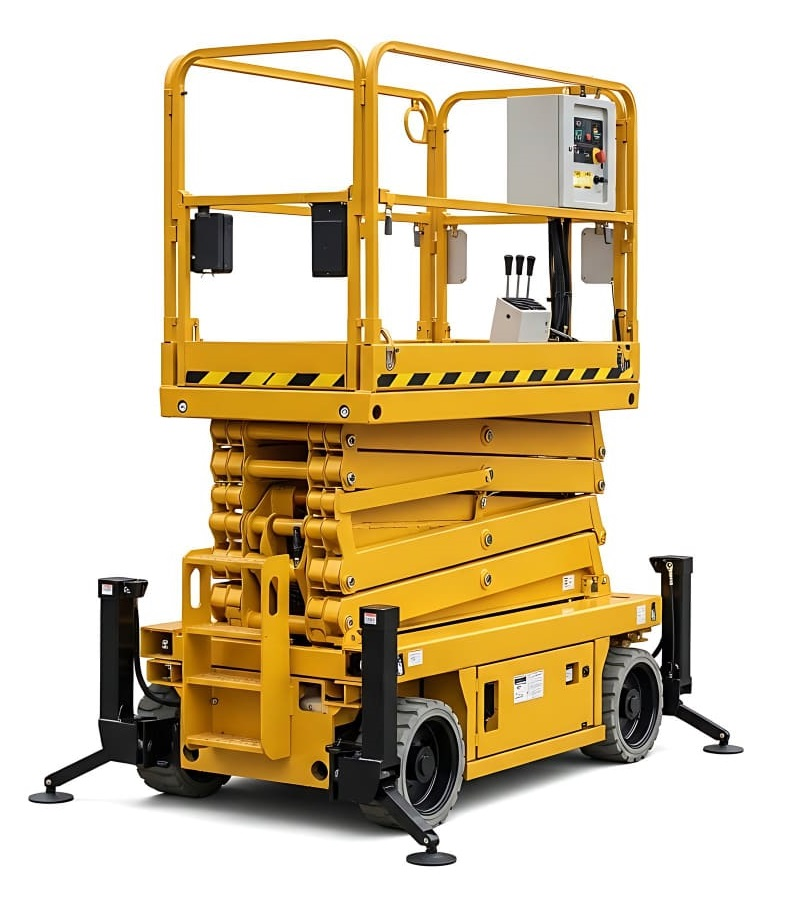
Scissor Lifts
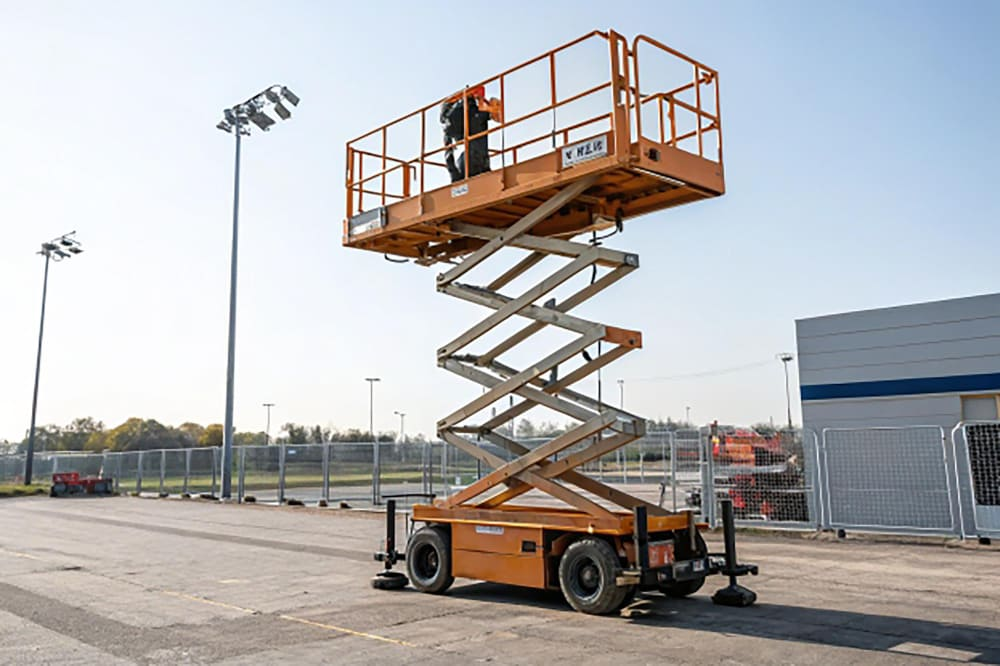
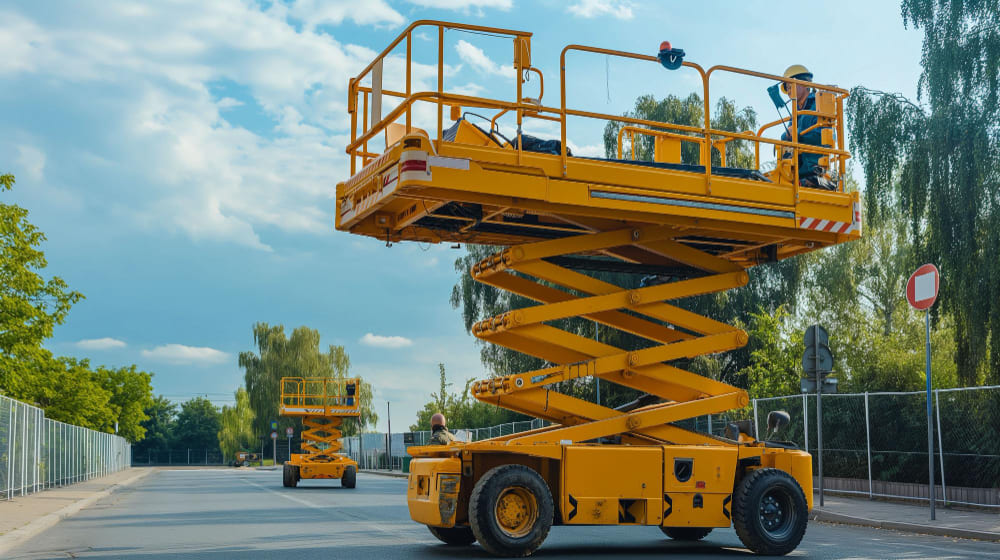
A scissor lift moves its platform up and down through crossed supports. It does not provide the same side reach as a boom lift, but it can offer a large work deck.
Electric slab models suit firm, level surfaces. Manufacturers design compact versions for narrow spaces, doorways, installation work and maintenance. Rough-terrain models provide more traction and suit outdoor sites where the surface creates a tougher challenge.
Scissor lifts can suit:
- Warehouse stock and equipment work
- Ceiling and lighting installation
- Electrical and mechanical maintenance
- Building fit-outs
- Sign installation
- High-level cleaning and inspection
The wide platform can also hold workers and tools, provided the total weight stays within the machine’s rated capacity.
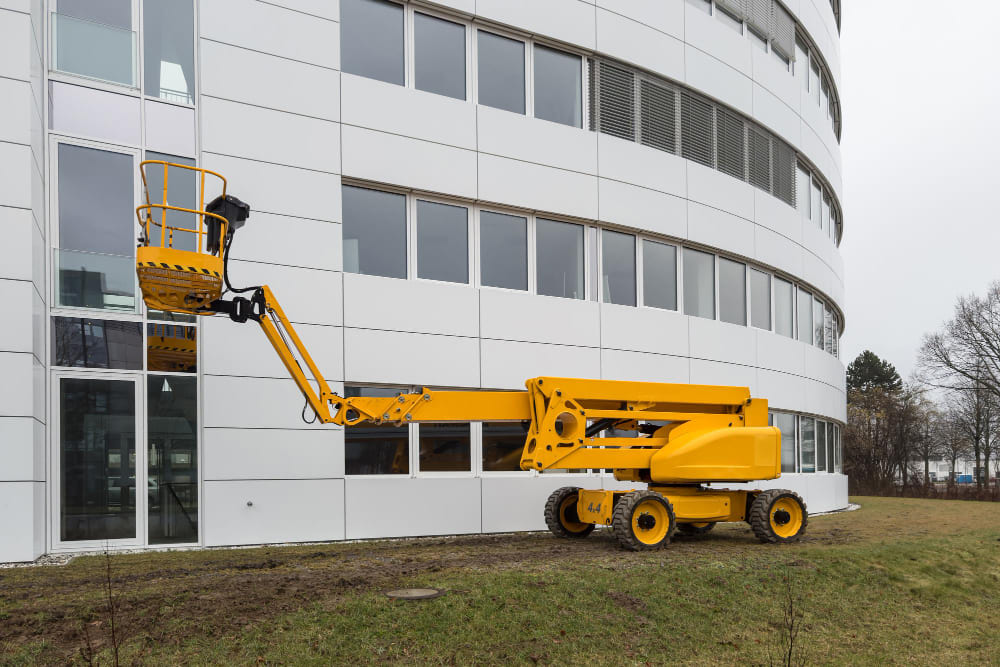
Articulated Boom Lift
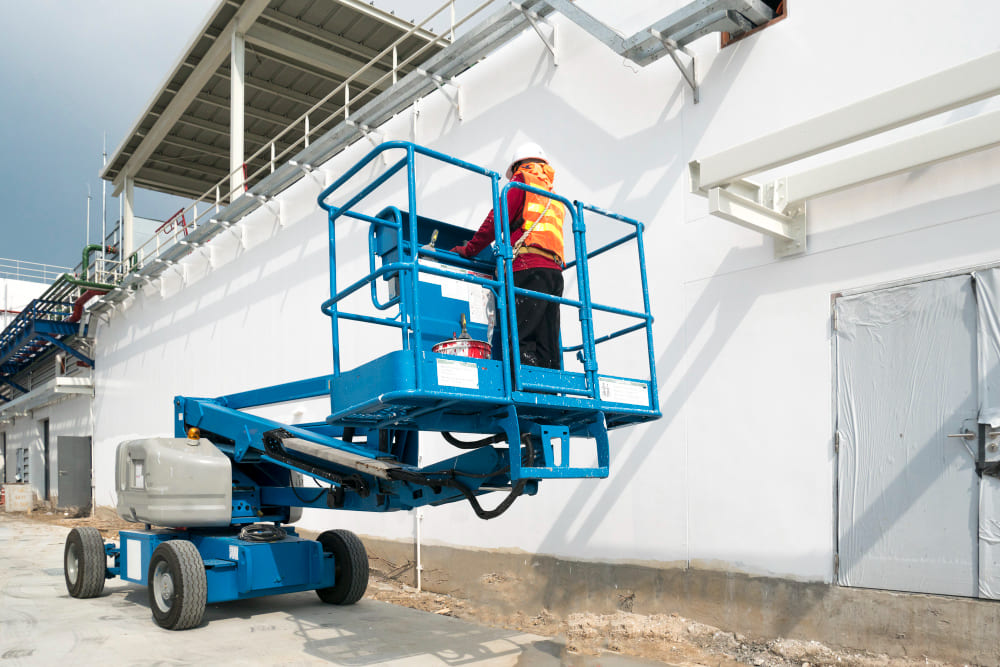
An articulated boom lift uses jointed boom sections that bend as the platform rises. This design helps workers reach over, under or around an obstacle.
Think of work behind pipework, above machinery, across a wall or beside a building feature. A straight lift path may not reach the spot. The bending boom can create a route to it.
This lift often supports construction, industrial maintenance, building services, painting and repair jobs. Electric models can suit sites where noise and exhaust emissions matter, while rough-terrain models can tackle demanding outdoor areas.
The main advantage comes from its reach pattern. When a job needs height and access around an obstruction, this machine can offer more flexibility than a vertical lift.
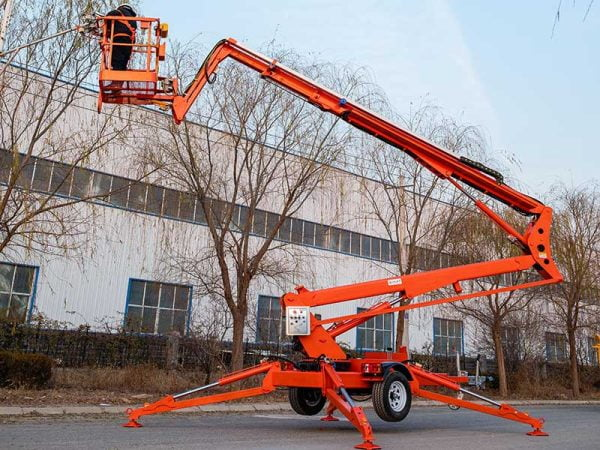
Telescopic Boom Lifts
A telescopic boom lift uses straight boom sections that extend outwards. It suits work that needs strong horizontal reach or access to a high point from a distance.
Common jobs include building work, steel construction, external maintenance and work around large industrial sites.
Unlike an articulated boom lift, the telescopic design does not bend around several barriers. Its strength lies in its long, direct reach.
Vertical Mast Lifts
Vertical mast lifts have a small footprint and raise the worker in a near-vertical path. Their compact body can make them useful in warehouses, shops, offices, hotels and other indoor spaces.
They can suit light maintenance, electrical work, stock handling, inspection and facility management where large machines cannot move with ease.
Where Are Aerial Work Platforms Used in Malaysia?
Malaysia has a broad mix of construction, manufacturing, logistics, commercial property and infrastructure work. This creates many tasks where safe access to height becomes important.
An aerial work platform can support construction teams during installation and finishing work. Genie notes that MEWPs can position workers, tools, equipment and materials during building work.
Factories may use aerial lifts for maintenance of lighting, pipes, ducts, cables and equipment. Warehouses may use them to reach high fittings, inspect racking or repair building systems. Property teams can use them for façade work, signs, cleaning and repairs.
The key point is simple: match the machine to the task rather than forcing one lift to handle every job.
Why the Right Lift Matters
Choosing the wrong machine can create more than an inconvenience. It can introduce hazards.
A machine may have enough height but lack the side reach needed for the task. A lift designed for smooth floors may struggle on rough ground. A large boom may not pass through the site’s access gate. A diesel unit may also prove unsuitable for an enclosed area where exhaust fumes create concerns.
DOSH guidance says employers should select the correct type of elevating work platform for the intended work. It also calls for firm, level ground, regular inspection and testing, safe clearance from power lines and control of hazards created by machine movement.
Good selection supports both safety and workflow.
How to Choose the Right Aerial Work Platform
Start with the job rather than the machine catalogue. Ask what the worker needs to reach and what stands between the lift and that point.
Check the Working Height and Reach
Measure the required working height. Then check whether the task needs vertical access, horizontal reach or both.
A scissor lift may work well when the job sits above the machine. An articulated boom lift may suit a work point that sits behind equipment or another structure. A telescopic boom may fit a task that needs long, straight reach.
Never choose a lift based on height alone.
Study the Ground Conditions
Ground conditions can change the whole choice.
Slab scissor lifts work on firm, level surfaces, while rough-terrain models provide traction and grade ability for more demanding outdoor areas.
For Malaysian sites, rain also deserves attention. Water can soften soil and alter site conditions. Teams should assess the ground before work starts and check it again when conditions change.
Measure Access Space
Check gates, doors, corridors, turning areas and overhead clearance.
A machine that reaches the work point still fails the job if it cannot enter the site. Measure the route before choosing the lift.
For indoor work, also check floor loading and surface condition. Some compact electric scissor lifts have low machine weights and narrow bodies for sensitive floors and restricted spaces.
Calculate the Platform Load
Count the workers, tools and materials that will enter the platform. Compare their combined load with the machine’s rated capacity.
DOSH warns that pushing or pulling objects outside a platform can increase the live load. Its fall-prevention guidance also says tools and materials should stay within the guardrails unless a full engineering and hazard assessment supports another arrangement.
Never treat the platform as a crane unless the machine and task have been designed for that purpose.
Pick a Suitable Power Source
Electric machines suit many indoor jobs because they reduce exhaust emissions and noise at the work point. Genie lists electric slab scissor models for indoor and outdoor work on firm, level surfaces and highlights their quiet operation.
Engine-powered units can suit demanding outdoor work. Hybrid machines can serve projects that move between different work areas.
Consider ventilation, charging access, shift length, terrain and site rules before making the choice.
Aerial Lift Safety: What Malaysian Work Sites Should Check
Safe equipment does not replace safe work.
DOSH’s Guidelines for the Prevention of Falls at Workplaces state that operators must receive training for the particular type of elevating work platform they use. The guidance also calls for inspection and testing in line with manufacturer requirements.
Before work starts, teams should check:
- Tyres, controls, guardrails, gates, alarms and safety devices
- Ground stability and slope
- Platform load limits
- Nearby power lines and overhead structures
- Traffic, workers and objects around the machine
- The manufacturer’s operating instructions
- The site’s risk assessment and emergency plan
Operator awareness deserves close attention. DOSH reported a fatal Malaysian MEWP incident in which a worker became trapped between the platform and a building beam. Its safety alert stresses training, awareness of nearby hazards, work-at-height knowledge and workplace risk assessment.
Workers should never climb on guardrails to gain extra height. They should also avoid leaving an elevated platform unless the work plan, equipment instructions and fall-protection measures allow it. DOSH guidance discourages climbing out of platforms at height and calls for fall protection when such access becomes essential.
Common Mistakes to Avoid
Avoid these common mistakes when using a lift:
- Choosing the wrong reach: Height alone is not enough. Check both vertical and horizontal reach.
- Ignoring ground conditions: Soft, wet, or uneven ground can affect stability.
- Overloading the platform: Keep workers, tools and materials within the rated load limit.
- Missing overhead hazards: Check for beams, cables, pipes and other obstacles.
- Poor operator training: Operators must understand the controls, limits and safety features.
- Using an unfamiliar model: Lift controls and movement can vary between machines.
A Simple Checklist Before Hiring or Buying
Before selecting equipment, confirm the working height, outreach, platform capacity, surface condition, machine width, power source and site access.
Then ask a few practical questions. Will the machine work indoors or outdoors? Does the site have slopes or soft ground? Are there beams, pipes, trees, cables or walls in the way? How many people and tools will the platform carry? Can the machine travel through every access point?
These answers can narrow the choice between scissor lifts, boom lifts and compact vertical machines.
Final Thoughts
The best lift is not the tallest or largest machine. It is the one that fits the work, the site, the load and the people using it.
For Malaysian businesses, choosing an aerial work platform should start with a site assessment. Check the height, reach, terrain, access, load, power source and nearby hazards. Then match those needs with the correct machine.
Scissor aerial lifts work well when workers need vertical access and platform space. Telescopic booms provide long, direct reach. An articulated boom lift can navigate around obstacles when a straight path cannot reach the work area.
Above all, pair the right equipment with trained operators, sound inspections, clear risk controls and the manufacturer’s instructions. That approach helps teams reach difficult work areas while keeping safety at the centre of every job.
FAQs
It is powered access equipment that raises workers, tools and permitted materials to an elevated work position.
Common types include scissor lifts, boom lifts, vertical mast machines, tracked lifts and truck-mounted platforms.
It suits work where the platform needs to reach over or around obstacles such as walls, machinery and structural sections.
The first term covers a broad group of elevated access equipment. A scissor lift is one type within that group and moves in a vertical path.
Check working height, horizontal reach, platform load, terrain, access width, power source and site hazards.
Yes. Electric scissor lifts and vertical mast machines can suit many indoor tasks when their dimensions, load limits and floor requirements match the site.
Inspect controls, tyres, guardrails, safety devices and the work area. Check for leaks, damage, overhead hazards and ground problems. Follow the manufacturer’s inspection list.
Renting can suit short or changing projects. Buying can suit frequent use when the business can manage storage, inspections, servicing and maintenance.